The Allies lost their hopes
after they were defeated in Suvla. Hamilton reported
that he required massive reinforcements for any further progress, but his request was
refused. Instead of receiving more troops, Hamilton lost two divisions. One of the French
divisions and the 10th were sent to the western front.
As seen, from the end of
August 1915, the idea of an evacuation had came into being. Kitchener had gone to Dardanelles to give an opinion
about the campaign's situation. After his inspection, he decided that the Gallipoli
Peninsula was "an awful place" and that further efforts to split the Turkish
defences were useless. |
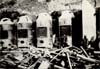
Large Water Condensers
|
Kitchener
recommended that Anzac and Suvla be evacuated immediately and these troops be sent to
Salonica.
The Allied troops evacuated Anzac and Suvla between 8 December and 20 December. From 28
December to 9 January, they withdrew Helles.
The evacuation was very well
planned. So that the Turks would not realise that the front line would eventually be
deserted, automatically firing rifles were devised. So that for half an hour after the
troops had left, occasional shots would be directed towards the Turkish lines. Mines were
dug out for possible pursuits. |
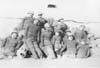
Puppet Soldiers found
in the trenches. |
Until the last day of the withdrawal, the
allies continued to fight and the leaving troops tied sacs on their boots and the
evacuation was made in a complete silence.
Were the Turks aware of the
evacuation? This is the most common question being asked for the Turkish side. The Allies'
success is uncontroversial, the evacuation was a triumph of organisation and discipline
and of course, the weather conditions' help is undeniable. In regard that the Turks had
realised the evacuation, they did not attempt an assault. |
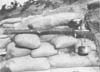
One of the automatic rifles
|
Although it was possible to give enormous
causalities to the Allies in the moment of withdrawal, the Turks preferred not to attack.
Turkey was in war in all sides of the country, she needed any soldier, and there was no
soldier to lose, not anymore.
Finally, on 9 January 1916 the Allies had completely left the Gallipoli Peninsula. This
defeat had changed the outcome of the Great War and effected the fates of the participated
countries. |
 |
